 If you’re asking, “What is EDIaaS?”, you’re not alone. As organizations modernize their technology stack, many are turning to EDIaaS (EDI as a Service) to simplify how they manage electronic data interchange. Instead of building and maintaining complex in-house EDI infrastructure, companies now rely on a cloud-based service model that delivers innovation with scalable, secure, and fully managed EDI capabilities.
At its core, EDIaaS is a cloud delivery model for electronic data interchange that allows businesses to outsource their EDI environment, software, integration platform, and ongoing support to a specialized provider. Rather than investing in on-premise gateways, translators, and mapping tools, organizations access a centralized platform in the cloud that manages the entire EDI process—from document exchange to compliance monitoring and data analysis.
In this blog, we’ll break down what EDIaaS is, how it works, and why more businesses across every industry are adopting this service model to streamline integration, improve data exchange, and support long-term operational excellence.
Table of Contents
- What is EDIaaS? Understanding the Service Model
- How EDIaaS Works Inside a Cloud Integration Platform
- Why Businesses Are Moving to a Cloud-Based EDIaaS
- The Role of EDI Services in Modern Business Operations
- EDIaaS and Supply Chain Performance
- Supporting Global Standards Including EDIFACT
- Integration With ERP Systems and Business Software
- Comparing the Traditional EDI Process vs. EDIaaS
- Risk Reduction and Operational Stability
- An Analysis of the Future of EDI Technology
What Is EDIaaS? Understanding the Service Model
EDIaaS (EDI as a Service) is a fully managed cloud EDI solution that delivers end-to-end electronic data interchange capabilities without requiring companies to build, host, or maintain their own internal EDI infrastructure.
In a traditional electronic data interchange environment, businesses are responsible for far more than simply sending and receiving documents. They must license and maintain EDI software, manage ongoing upgrades, and support dedicated gateway and EDI communication tools. Internal teams are typically tasked with performing and maintaining EDI mapping, updating configurations to comply with evolving EDI standards such as ANSI X12 and EDIFACT, and overseeing every stage of each EDI implementation. As a result, every EDI project becomes an operational responsibility that consumes time, technical resources, and budget.
With EDIaaS, those responsibilities shift to a specialized provider operating a secure cloud integration platform, much like GraceBlood’s VelociLink™. The provider manages the entire EDI process, including data validation, transformation, monitoring, submissions, compliance updates, and reporting. Instead of maintaining infrastructure and troubleshooting errors, internal teams can focus on higher-value business initiatives. By consuming electronic data interchange as a service, organizations gain reliability and scalability without the ongoing burden of EDI maintenance.
How EDIaaS Works Inside a Cloud Integration Platform
At the center of EDIaaS is a cloud-based EDI integration platform that manages data exchange between business partners.
Here’s how the process typically works:
1. A document (such as a purchase order or invoice) is generated in ERP systems like D365 or NetSuite.
2. The data is either transmitted securely to or picked-up securely from the EDIaaS platform.
3. The platform performs EDI mapping and converts the data into required EDI standards such as ANSI X12.
4. The document is validated and transmitted via secure EDI communication protocols such as SFTP or AS2 to the trading partners.
5. Acknowledgments and submissions are monitored in real time.
6. Ongoing analysis ensures operational stability.
Because everything operates in the cloud, the service scales automatically as transaction volumes increase.
Why Businesses Are Moving to a Cloud-Based EDIaaS
Modern business operations demand speed, flexibility, and reliability. Legacy electronic data interchange systems often create friction within business processes due to manual monitoring, limited scalability, and rigid integration models.
Businesses are adopting EDIaaS because it delivers:
- Scalable cloud infrastructure
- Faster partner onboarding
- Simplified integration with ERP systems
- Reduced internal IT workload
- Stronger data exchange visibility
Instead of managing electronic data interchange as a technical burden, companies consume it as a strategic service.
The Role of EDI Services in Modern Business Operations
EDI services are no longer just back-office utilities. They are foundational to supply chain management, procurement, logistics, and finance operations.
Electronic data interchange supports critical business processes such as:
- Order exchange
- Invoice submissions
- Shipment notifications
- Inventory updates (often in real-time with the prevalence of APIs)
- Compliance reporting
When these exchanges fail, supply chain disruptions follow. A managed EDIaaS service reduces that risk by providing proactive monitoring and structured analysis of every transaction.
EDIaaS and Supply Chain Performance
In today’s global supply chain, accurate and timely data exchange is essential to maintaining continuity and competitiveness. Electronic data interchange enables businesses to communicate instantly with trading partners across industries, ensuring that purchase orders, invoices, shipment notices, and acknowledgments move efficiently between systems. When this exchange functions smoothly, supply chain management becomes more predictable and resilient.
EDIaaS enhances supply chain performance by automating document exchange and significantly reducing manual intervention. Automation improves submission accuracy by minimizing human error and ensuring that data is validated before it reaches a trading partner. At the same time, real-time visibility into transaction status allows businesses to monitor activity proactively rather than reacting to delays or rejected submissions. Because EDIaaS operates within a centralized cloud integration platform, it also strengthens integration across ERP systems and other critical business applications.
Since the platform runs in the cloud, it can easily scale to accommodate seasonal volume spikes, new partner connections, or global expansion. This flexibility allows businesses to grow and adapt without investing in additional infrastructure, while maintaining reliable and consistent electronic data interchange across the entire supply chain.
Supporting Global EDI Standards Including EDIFACT
Electronic data interchange depends on standardized formats to enable consistent data exchange. Different regions and industries rely on various EDI standards, including ANSI X12 and EDIFACT.
With EDIaaS, the service provider ensures compliance with these standards and manages updates as requirements evolve. Instead of modifying internal software each time standards change, businesses rely on a centralized integration platform that maintains compatibility across global trading networks.
This approach simplifies cross-border data exchange and strengthens relationships across the supply chain.
Integration With ERP Systems and Business Software
One of the strongest advantages of EDIaaS is simplified integration. Instead of building multiple custom connections, businesses connect their ERP systems once to the cloud platform.
The provider manages:
- Data transformation
- Routing logic
- EDI communication protocols
- Monitoring and analysis
This centralized integration approach improves data accuracy and reduces system complexity. It also ensures that internal business processes align with external data exchange requirements.
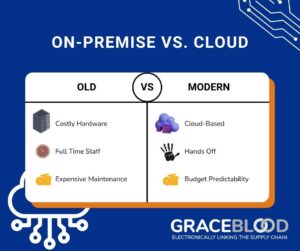
Comparing the Traditional EDI Process vs. EDIaaS
Traditional EDI systems often require significant maintenance and oversight. They are typically installed on-premise and depend heavily on internal IT resources.
EDIaaS offers a different model:
Traditional EDI
- On-premise software
- Manual monitoring with fully trained staff
- Limited scalability
- Complex upgrades
EDIaaS
- Cloud-based platform
- Managed service model
- Scalable infrastructure
- Continuous monitoring and analysis
This shift from infrastructure ownership to service consumption improves agility and supports business growth.
Risk Reduction and Operational Stability
An improperly managed EDI project can result in rejected submissions, compliance penalties, delayed payments, and strained partner relationships. Because electronic data interchange directly supports revenue-generating operations such as order processing, invoicing, and fulfillment, reliability is not optional—it is essential. Even minor data errors can ripple across the supply chain and disrupt critical business processes.
EDIaaS reduces risk by introducing automated monitoring, structured data validation, and centralized process management within a secure cloud environment. Every transaction is checked against required EDI standards as well as internal business rules before it is transmitted, helping ensure accuracy and compliance. Real-time analysis and proactive alerts provide visibility into potential issues so they can be addressed before they escalate into larger operational problems.
By placing responsibility for their EDI solution with a specialized service provider like GraceBlood, businesses strengthen operational stability and protect the integrity of their data exchange. This managed approach not only reduces exposure to costly disruptions but also supports consistent, dependable performance across the entire organization.
An Analysis of the Future of EDI Technology
Despite the rise of APIs and emerging integration technologies, electronic data interchange remains the backbone of structured B2B data exchange across industries. For decades, electronic data interchange has enabled standardized, reliable exchange of critical business documents, and that foundation continues to support modern supply chain ecosystems. What has changed is the delivery model.
EDIaaS modernizes electronic data interchange by combining cloud infrastructure, advanced integration capabilities, intelligent automation, ongoing analysis, and managed service oversight within a single integration platform. Rather than functioning as a reactive IT utility that requires constant troubleshooting and maintenance, electronic data interchange becomes a scalable, cloud-based service aligned with broader digital transformation goals.
This evolution transforms electronic data interchange from a technical burden into a strategic platform that supports long-term business success. By embedding integration, monitoring, compliance, and optimization into a managed cloud environment, EDIaaS ensures that data exchange remains reliable, adaptable, and ready to scale as business needs evolve.
Why Businesses Are Ultimately Choosing EDIaaS
So, what is EDIaaS?
EDIaaS is a cloud-delivered service model for electronic data interchange that simplifies integration, strengthens data exchange reliability, and enhances overall business operation performance. Instead of managing software, infrastructure, and compliance internally, organizations consume electronic data interchange as a fully managed service designed to support growth and stability.
Businesses are choosing EDIaaS because it reduces operational overhead and accelerates EDI implementation timelines. It strengthens supply chain management by improving data accuracy and ensuring consistent submissions across trading partners. The cloud-based integration platform supports scalable growth, adapts to changing transaction volumes, and aligns electronic data interchange with broader business strategy. At the same time, the managed service model enhances operational excellence by providing continuous monitoring, structured analysis, and expert oversight.
In today’s competitive digital economy, EDIaaS represents the modernization of electronic data interchange—delivering flexibility, stability, and measurable success through a secure cloud integration platform. If electronic data interchange is critical to your business, EDIaaS is no longer simply an alternative deployment option. It is a strategic advantage that positions your organization for sustainable success.
Ready to modernize your electronic data interchange strategy? Have questions? Speak with one of our EDIaaS consultants for additional information and discover how a cloud-based integration platform can simplify operations, reduce risk, and support long-term growth.